




Species Account for Ceratina cyanea
Ceratina cyanea (Kirby, 1802)
Blue Carpenter Bee
Aculeata: Xylocopinae
Reproduction for study and non-profit use permitted, all other rights reserved.
Taxonomic group: bees and wasps (Aculeata) - County data
View time series maps for Ceratina cyanea
member log-on for taxon report
Status: RDB 3
Essex RDB: Listed
Threat: Essex Vulnerable
Images

upload a new image
Species text
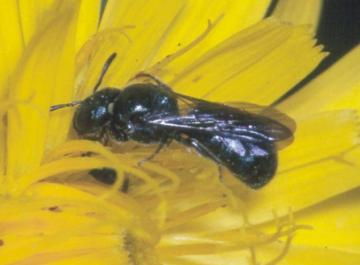
The Blue Carpenter Bee Ceratina cyanea is a rare bee confined to southern England, with most recent records from West Sussex and the Maidstone area of Kent. It was rediscovered in Essex after nearly 100 years in 1993 at Mill Wood Pit, part of the Chafford Hundred development in Thurrock. Here it was present in very large numbers, but the site has now been destroyed and is a large housing estate. The bee has evidently been expanding its range and has now been recorded from many sites near the Thames in the south of the county. A metapopulation area has also been identyified in the wider Colchester area in North Essex. This species nests in dead broken bramble stems, so the presence of a certain amount of bramble scrub in open situations where dead stems are exposed to the sun is crucial to its survival. It is likely to prefer bramble growing in drought-stressed and mineral deficient situations. The bee collects pollen from a variety of flowers including yellow composites, knapweed and Lotus. References
Habitats
Recorded management for locations with Ceratina cyanea
Recorded substrate and hydrology for locations with Ceratina cyanea
Why not join the Club, register and add a new species page
Interpretation of distribution maps